Reverse Shoulder Replacement Rehab: What Really Works?
Evidence-Based Physical Therapy After Reverse Total Shoulder Arthroplasty (rTSA)
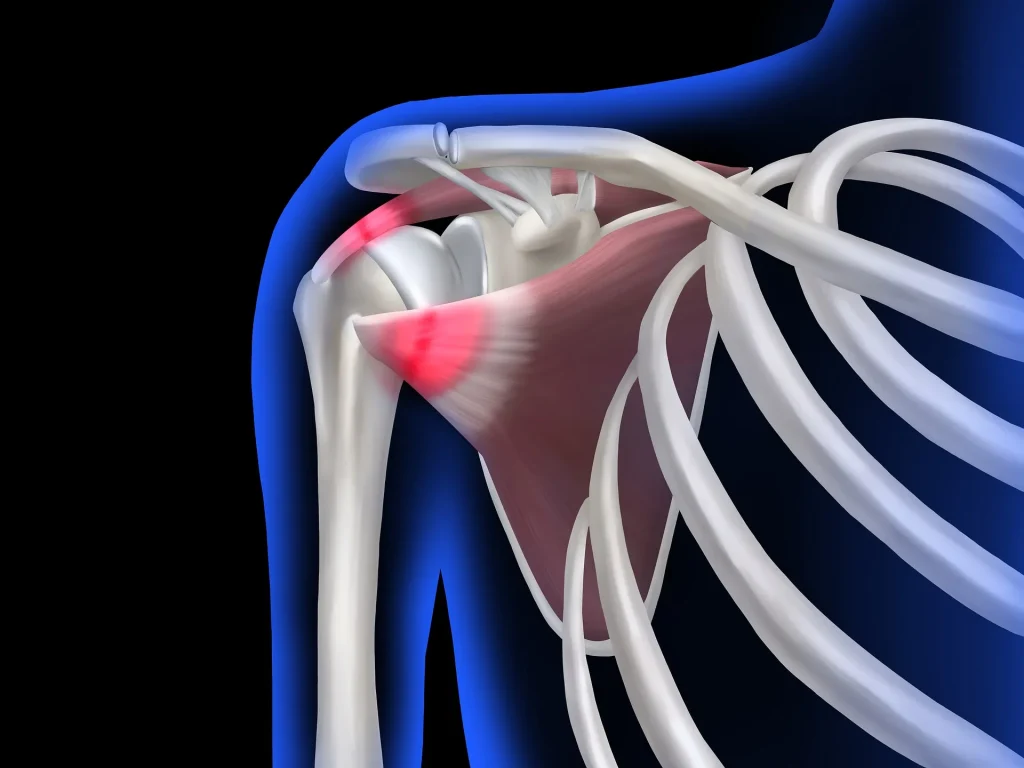
Reverse Total Shoulder Arthroplasty (rTSA) has transformed outcomes for patients with complex shoulder conditions—especially massive rotator cuff tears and failed previous surgeries.
But surgery is only half the journey. The true success of rTSA depends on structured, evidence-based physical therapy.
Understanding Reverse Shoulder Replacement

Unlike traditional shoulder replacement, rTSA changes the mechanics of the joint. Instead of relying on the damaged rotator cuff, the procedure shifts function to the deltoid muscle, allowing patients to regain arm elevation even when the cuff is non-functional. This means rehabilitation must follow a completely different strategy than standard shoulder protocols.
Why Rehabilitation Must Be Specialized

After rTSA:
- The shoulder is mechanically stable but still vulnerable.
- The deltoid becomes the primary mover.
- Certain movements can increase dislocation risk, especially early on.
Improper or aggressive rehab can compromise surgical outcomes.
Modern rehab focuses on:
- Early protection.
- Gradual activation.
- Deltoid-centered strengthening.
The Modern Physical Therapy Approach (Step-by-Step)
Phase 1: Protection & Passive Movement (Weeks 0–3)
Goals:
Protect the surgical repair.
Reduce pain and inflammation.
Prevent stiffness.
What we do:
Sling support (usually 3–4 weeks).
Gentle passive range of motion.
Hand, wrist, and elbow exercises.
Important precautions:
Avoid shoulder movement against resistance.
No reaching behind the back (For example, pushing up from a chair).
No sudden or combined movements.
Phase 2: Controlled Activation (Weeks 4–6)
Goals:
Begin safe movement.
Activate the deltoid muscle.
Improve control.
What we do:
Assisted → active shoulder movements.
Scapular stabilization exercises.
Gentle functional reaching.
This is where patients begin to regain independence safely.
Phase 3: Strength & Function (Weeks 6–12)
Goals:
Restore active movement.
Build strength and endurance.
Improve daily function.
What we do:
Deltoid strengthening exercises.
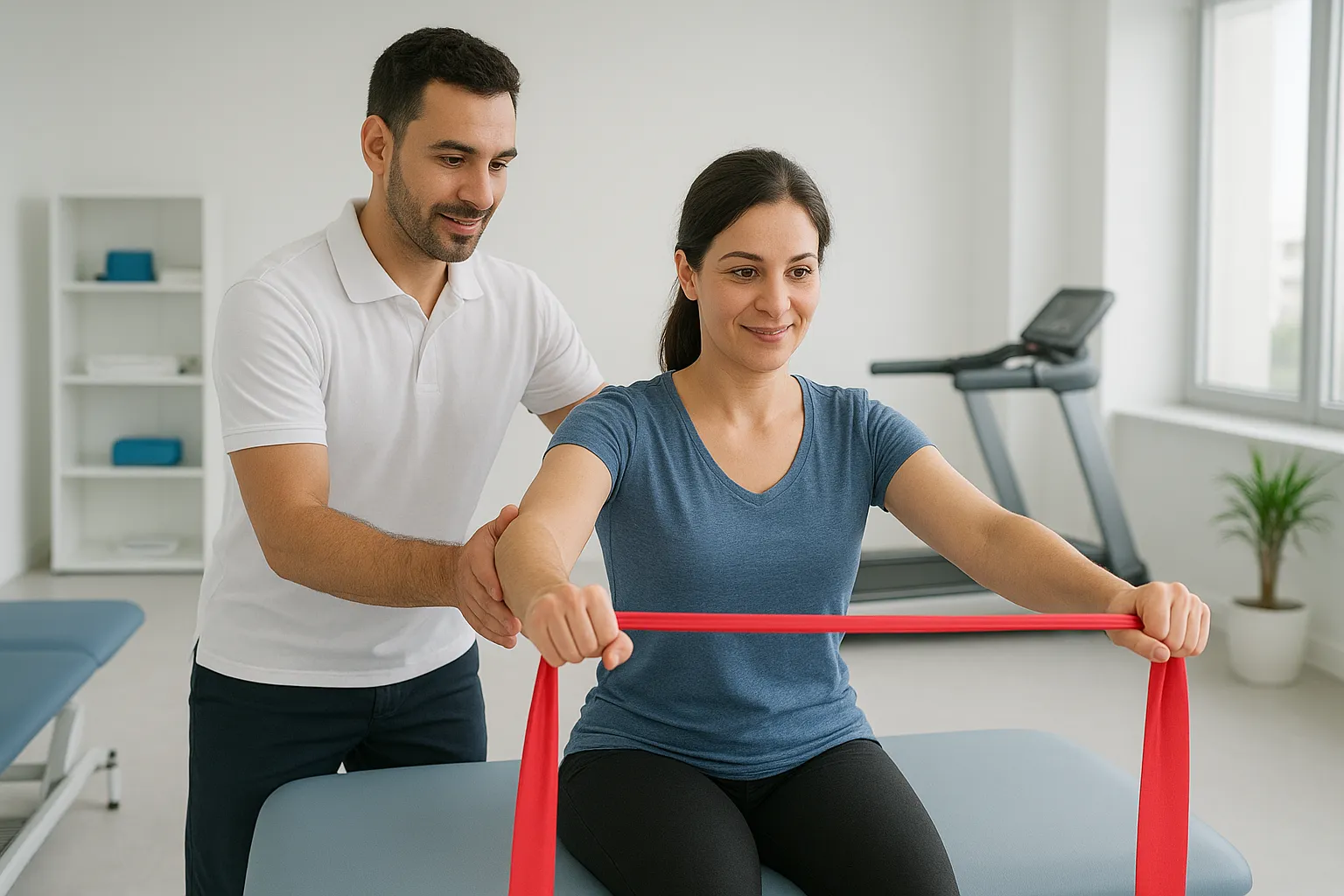
Resistance band training.
Postural and scapular control work.
Phase 4: Return to Daily Life (3+ Months)
Goals:
Restore independence.
Improve confidence and movement quality.
What we do:
Functional training (reaching, lifting light objects).
Task-specific rehabilitation.
Gradual return to normal activities.
Key Safety Rules After rTSA

To prevent complications:
Avoid:
- Reaching behind your back.
- Pushing yourself up from a chair early.
- Sudden or forceful movements.
Highest risk period: first 6–12 weeks.
What Results Should You Expect?

Most patients achieve:
- Improved ability to raise the arm overhead.
- Significant pain relief.
- Better performance in daily activities.
However, rotation (especially internal rotation) may remain limited. And full “normal” shoulder function is not always expected.
Why Physical Therapy Makes the Difference
At Al Amal Physical Therapy Center, we focus on:


- Personalized rehabilitation plans.
- Evidence-based progression.
- Functional recovery—not just range of motion.
Start Your Recovery the Right Way
If you or a loved one has undergone reverse shoulder replacement, early and guided physical therapy is essential.
References
- Howard, M. C., Trasolini, N. A., & Waterman, B. R. (2023). Optimizing Outcomes After Reverse Total Shoulder Arthroplasty: Rehabilitation, Expected Outcomes, and Maximizing Return to Activities. Current reviews in musculoskeletal medicine, 16(4), 145–153. https://doi.org/10.1007/s12178-023-09823-5
- Kennedy, J. S., Garrigues, G. E., Pozzi, F., Zens, M. J., Gaunt, B., Phillips, B., Bakshi, A., & Tate, A. R. (2020). The American Society of Shoulder and Elbow Therapists’ consensus statement on rehabilitation for anatomic total shoulder arthroplasty. Journal of shoulder and elbow surgery, 29(10), 2149–2162. https://doi.org/10.1016/j.jse.2020.05.019
GET IN TOUCH